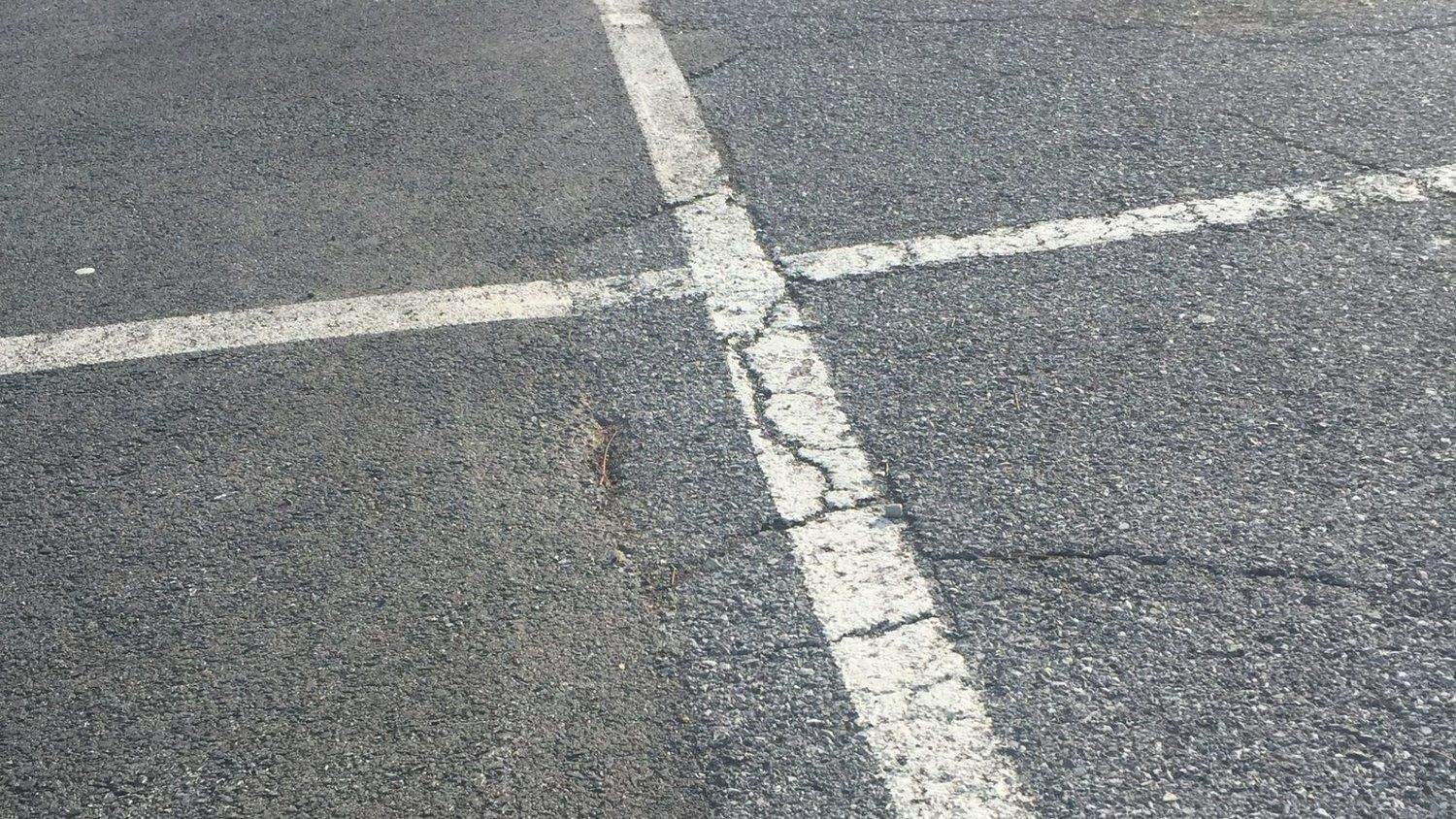

A driver pulls into a plaza lot after the season’s first real snowfall. The curbs are buried, the lane edges have disappeared under a few centimetres of white, and the only thing distinguishing a parking stall from a drive aisle is whatever paint is still visible poking through. If that paint has worn down to a faint outline over the summer, the driver isn’t navigating the lot anymore, they’re guessing. And a lot full of guessing drivers, in low light, on a slippery surface, is exactly how a plaza ends up with fender benders in its own parking field.
Property managers spend a lot of attention on sealcoating and crack repair, and for good reason, but there’s a detail that gets overlooked every single winter: once snow covers the pavement, the asphalt itself stops being the reference point for drivers and pedestrians. Line painting becomes the entire navigation system for the lot. If it’s not in good shape before the first snowfall, there’s no fixing that gap until spring.
In this article:
- Why snow changes the rules for how a lot gets navigated
- What disappears first: pavement condition or the markings on top of it
- The mechanics of why faded lines fail hardest in winter conditions
- Reflective paint, plow damage, and what actually holds up under snow
- Repainting priorities before the first snowfall
- Why waiting until spring costs more than just paint
Why Snow Changes the Rules for How a Lot Gets Navigated
In every other season, drivers have more than one way to read a parking lot. Curb lines, pavement texture changes, the edge of a landscaped island, the general shape of the asphalt itself, all of these give visual cues even if the paint has faded. Snow erases nearly all of that at once. Curbs disappear under drifting, texture differences flatten out under a uniform white layer, and the boundary between drive aisle and parking stall becomes whatever markings happen to still be visible through the snow or the tire tracks that have packed it down.
That shift matters because it changes what “good enough” striping actually means. A faded line that was a minor cosmetic issue in July becomes a genuine wayfinding failure in January, because it’s no longer competing with other visual cues, it’s the only cue left. Fire lanes, accessible stalls, and pedestrian crossings depend even more heavily on paint once the usual secondary markers are buried.
What Disappears First: Pavement Condition or the Markings on Top of It
There’s a common assumption that line painting is secondary to pavement condition, that the asphalt underneath matters more than the paint on top. That’s true for structural integrity, but it’s backwards for winter safety. A lot with solid asphalt and faded lines is more dangerous to navigate in the snow than a lot with aging asphalt and crisp, clearly visible lines, because the hazard that actually causes incidents in winter isn’t usually a crack under the snow, it’s a driver or pedestrian misjudging where the lane, stall, or crosswalk actually is.
This is the counterintuitive part that catches a lot of facility teams off guard heading into the season. Pavement condition issues, cracking, minor settling, surface wear, are largely hidden once snow covers the lot. Striping issues are not. A plaza that pushed its crack sealing budget through in the fall but skipped repainting has actually prioritized the problem that’s about to be invisible over the one that’s about to become the entire safety system for the property.
The Mechanics of Why Faded Lines Fail Hardest in Winter Conditions
Paint doesn’t fail all at once, it degrades gradually from UV exposure, tire friction, and the repeated freeze-thaw cycling that works at the bond between the paint and the asphalt surface underneath. By late fall, a line that was painted the previous spring has usually lost a noticeable amount of its original contrast, even if it still looks passable to someone glancing at a dry, well-lit lot in October.
The problem is that contrast is exactly what gets stripped away first under winter conditions. Low afternoon light, headlight glare off a wet or icy surface, and any amount of snow cover all reduce how much visual contrast a line provides, even before accounting for the paint’s own fading. A line that was borderline visible in good lighting on dry pavement can become effectively invisible once all three of those winter factors stack on top of each other at the same time, which is precisely the situation a driver is in pulling into a plaza lot after dark on a snowy evening.
Reflective Paint, Plow Damage, and What Actually Holds Up Under Snow
Not all line painting performs the same way once winter sets in, and there are a few things worth understanding before assuming a repaint will solve the whole problem.
- Reflective or high-visibility paint formulations hold contrast noticeably better under headlight glare and low winter light than standard striping paint
- Plow blades and shovel edges are hard on fresh paint, which means markings applied right before heavy plowing season can wear faster than the same paint applied with more lead time to cure and bond properly
- Fire lanes and accessible markings deserve priority treatment or more durable paint, since these are the lines where poor visibility carries the most serious consequences
- Thermoplastic or epoxy-based markings, where budget allows, generally outlast standard paint through a full winter of plowing and salt exposure
Understanding these tradeoffs ahead of time helps a property manager spend a repainting budget where it actually protects people, rather than just refreshing every line in the lot evenly.
Repainting Priorities Before the First Snowfall
With a limited window before cold weather sets in, not every line in the lot deserves equal attention. A pre-winter repainting plan should prioritize:
- Fire lane markings, since emergency access can’t depend on a driver’s memory of where the lane used to be
- Accessible parking stalls and their connecting access aisles
- Pedestrian crosswalks near building entrances, where foot traffic and vehicle traffic cross paths most often
- Drive aisle direction arrows at blind corners or tight turns, where misjudging the flow of traffic carries the highest collision risk
- Standard stall lines across the general parking field, which still matter but can reasonably come last if the schedule gets tight
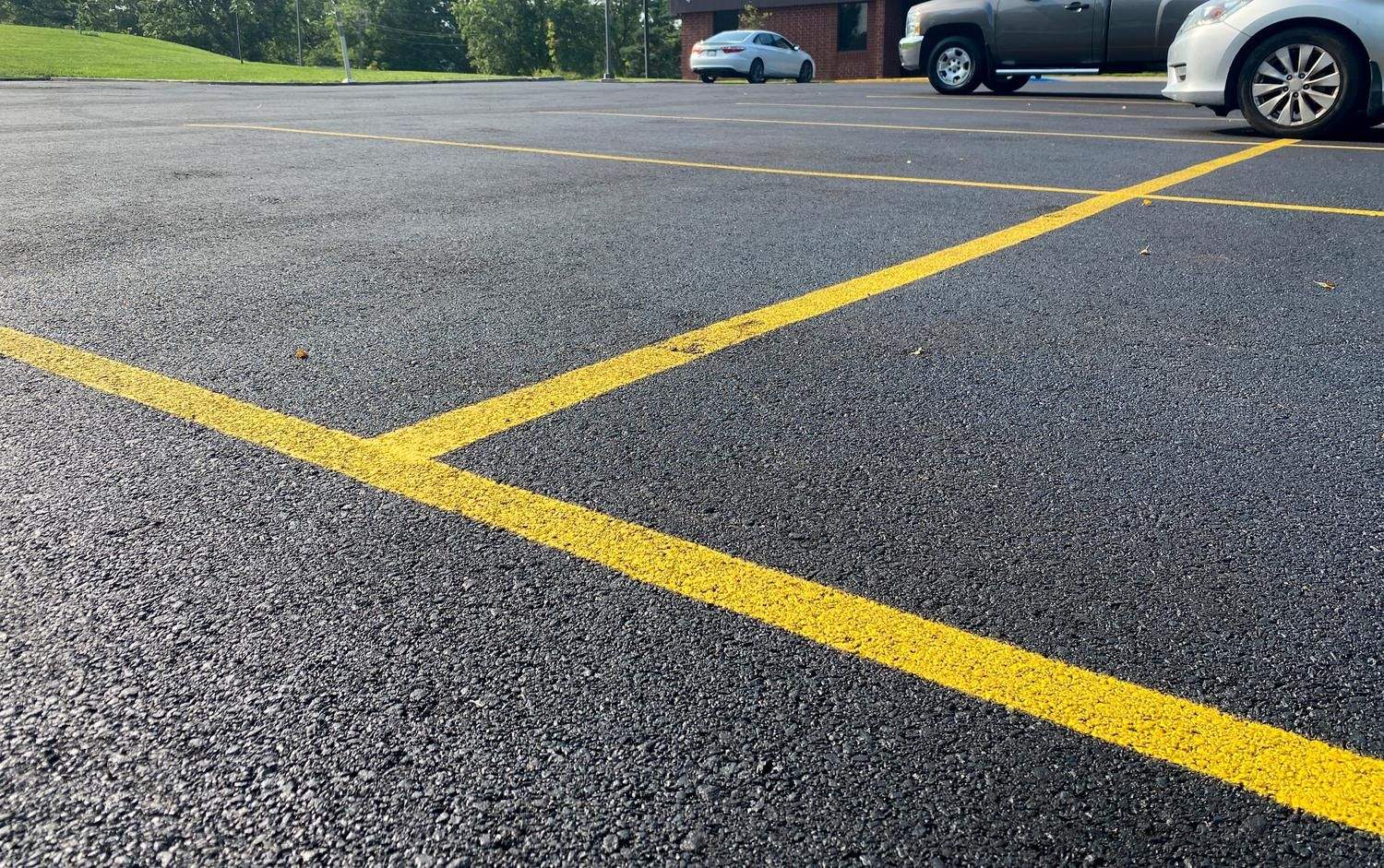
Working through this list in order means the areas with the highest safety stakes get fresh, reflective markings even if budget or scheduling constraints mean the whole lot can’t be repainted before the first snow.
Why Waiting Until Spring Costs More Than Just Paint
It’s tempting to assume repainting is a spring task, something to handle once the snow melts and the lot is fully visible again anyway. The problem with that logic is that it treats winter as a season where line painting doesn’t matter, when it’s actually the season where it matters most. A lot that goes into winter with faded markings doesn’t just look worn, it operates with a reduced margin for error for several months, right through the time of year when slippery conditions already make driver and pedestrian mistakes more consequential.
As the team at Black and Yellow Pavement Maintenance often tells property managers, the repainting job that gets pushed to spring because “nobody will notice under the snow” is exactly backwards. Nobody notices the good lines under the snow either, because they’re doing their job quietly. What gets noticed is the incident report that comes in during the first heavy snowfall because a driver couldn’t tell where the lane ended.
Get Your Lot Striped Before the First Snowfall
If your lot’s markings have faded past the point of being useful once snow starts covering the pavement, now is the window to get it handled, not after the first storm already caught drivers guessing. Black and Yellow Pavement Maintenance works with property and facility managers across Guelph and the surrounding region to schedule line painting projects that hold up through plowing season and give drivers a clear, visible lot all winter long. Book a free site inspection today to get your striping priorities locked in before the snow does.